 黑客技术
点击放大
MBE - Course materials for Modern Binary Exploitation by
项目说明
Modern Binary Exploitation - CSCI 4968
This repository contains the materials as de and used by RPISEC to
teach Modern Binary Exploitation at Rensselaer Polytechnic Institute in
Spring 2015. This was a uni course de and run solely by students to teach
skills in research, reverse engineering, and binary exploitation.
<p align="center">
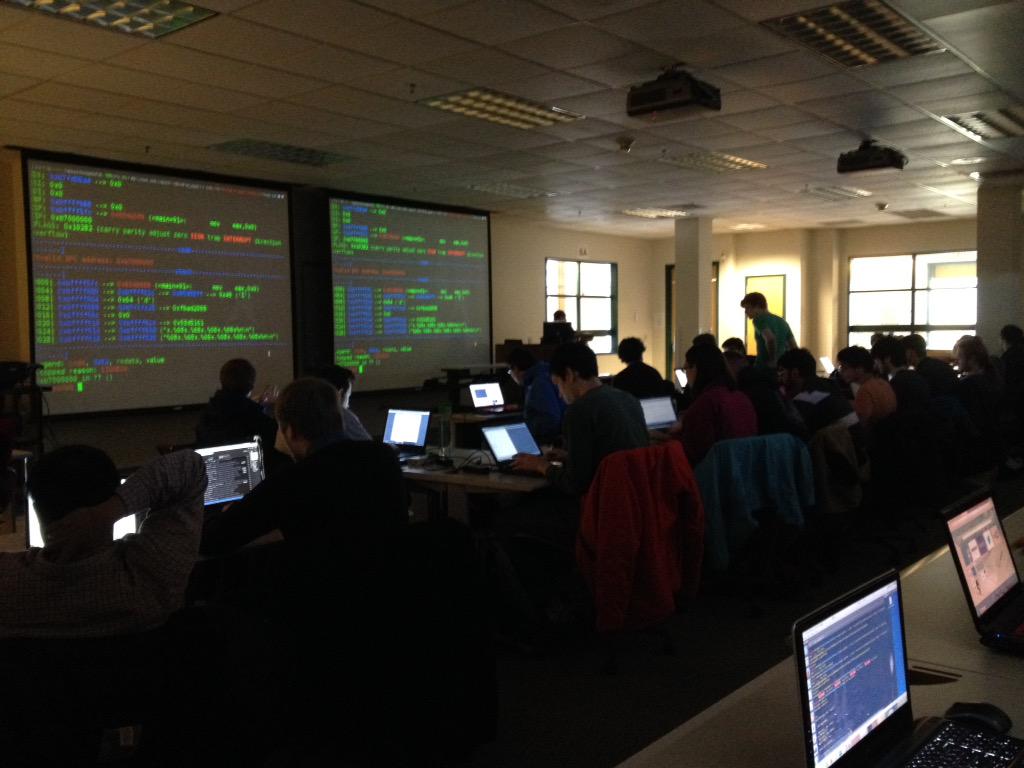
<img width="600px" src="/resources/images/mbe.jpg" alt="MBE"/>
</p>
About the Course
research & exploit de is something totally outside the bounds of what
you see in a normal computer science curriculum, but central to a lot of what we RPISEC
members find oursel in our free time. We also find that subjects in offensive
security tend to have a stigma around them in uni that we would like to help shake
off. These are practical, applied skills that we're excited to share with those interested
in learning.
The question this course posed was _'Can we teach a bunch of programmers how to pwn?'_
Course website:
Syllabus:
Course Abstract
>_Cybersecurity is one of the fastest growing fields in computer science, though its study is rarely covered in academia due to its rapid pace of de and its technical specificity. Modern Binary Exploitation will focus on teaching practical offensi skills in binary exploitation and reverse engineering. Through a combination of interacti, hands on labs, and guest speakers from industry, the course will offer students a rare opportunity to explore some of the most technically in and fascinating subjects in the rapidly e field of security._
>_The course will start off by co basic x86 reverse engineering, analysis, and classical forms of Linux-based userland binary exploitation. It will then transition into protections found on modern systems (Canaries, DEP, ASLR, RELRO, Fortify 源码, etc) and the techniques used to defeat them. Time permitting, the course will also co subjects in exploitation including kernel-land and Windows based exploitation._
Prerequisite Knowledge
This course carried a prereq of
Computer Organization - CSCI 2500
at RPI. Computer Organization is RPI's basic computer architecture course that teaches
things like C, MIPS assembly, x86 assembly, Datapaths, CPU Pipelining, CPU Caching,
Memory Mapping, etc.
Our expected demographic for Modern Binary Exploitation was students with zero reverse
engineering or binary exploitation knowledge. That said, to be able to take this course
you will probably need at least the following skills.
* Working knowledge of C/C++
* Any assembly le
* Basic Linux command line experience
Lecture Breakdown
Lecture | Title | Topics
------- | ----- | ------
01 | Syllabus and Review | Linux, C, x86
02 | Introduction to Reverse Engineering | Tools and the VM
03 | Extended Reverse Engineering | GDB & IDA
04 | Intro to Memory Corruption | ELF, the stack, calling con, buffer o
05 | Shellcoding / Code Injection | Writing shellcode, de scenario relevant payloads
06 | Format String | Format strings, DTOR/GOT o
07 | DEP and ROP | Data Execution Pre, writing ROP chains, ret2libc
08 | Secure Systems and 游戏 Console Exploitation | OpenBSD, SELinux, GRSEC, 游戏 Console Exploitation
09 | Address Space Layout Randomization (ASLR) | O, info leaks, partial o, ASLR closure
10 | Heap Exploitation | Heap structure and concepts, corruption, use after free
11 | Misc Concepts and Stack Cookies | Signed/unsignedness issues, uninitialized data, etc, bypassing stack cookies
12 | C++ Differences and Concepts | C++ basics, structures, , exceptions
13 | Linux Kernel Exploitation | Kernel basics, kernel exploitation, mitigations (mmap_min_addr, kallsyms, SMEP/SMAP), bypassing mitigations
14 | Exploitation on 64bit, ARM, Windows | Exploitation differences on other architectures & platforms
15 | Automation & The Future of Exploitation | Fuzzing, taint analysis, dynamic instrumentation, SMT/SAT solvers
*Refer to ERRATA.md for slide corrections.*
Lab Breakdown
Lab | Topic | Corresponding Lectures
--- | ----- | ----------------------
01 | Reverse Engineering | 01-03
02 | Memory Corruption | 04
03 | Shellcoding | 05
04 | Format Strings | 06
P1 | Project 1 | 01-06 (Comprehensive)
05 | DEP and ROP | 07
XX | ASLR should always be enabled from this point on | See for details
06 | ASLR | 09
07 | Heap | 10
08 | Misc and Stack Cookies | 11
09 | C++ | 12
P2 | Project 2 | 01-12 (Comprehensive)
10 | Linux Kernel | 13
Repository Breakdown
* src/ - Source code for labs
* setup_wargame.sh,external_tools.sh - Install scripts to setup MBE on an Ubuntu 14.04 32-bit machine
* MBE_release.tar.gz - Binaries for labs and projects
* MBE_lectures.tar.gz - PDFs of all lecture slides
* MBE_VM.vmdk.gz - A vmdk (disk image) of a VM that is already setup
Labs - The RPISEC Warzone
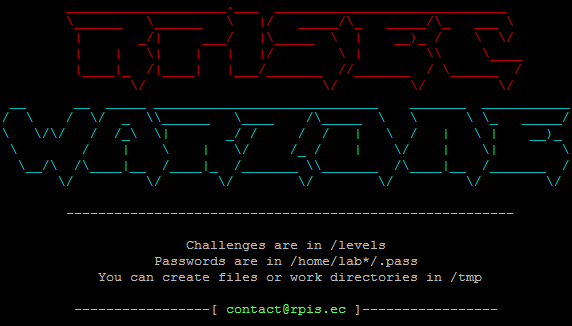
The Warzone is a custom wargame that was built from the ground up for this course. It provided
a complete and consistent learning platform for us to release the labs and projects to the
students. The wargame was built ontop of a Ubuntu 14.04 32-bit ser, and is
modeled after existing local pri escalation themed wargames. If you have e
the fantastic IO wargame (formerly hosted at SmashTheStack), the Warzone has a
somewhat similar structure.
<p align="center">
<img src="/resources/images/warzone.png" alt="RPISEC Warzone"/>
</p>
Some basic tweaks have been made in an attempt to isolate players from each other and create
an indi experience, but it's probably far from perfect. It also comes pre-installed with
some tools, scripts, and configs that can make a beginner's life a bit easier in exploit
de.
You can roll with the Warzone we designed, or you can try to setup your own using our scripts.
___
Option One - Pre-made Warzone VM
As the years pass, compilers will change, security will improve, and the challenges in this
repo may no longer be solvable. Because of this, we ha a machine disk image
that closely replicates the uni Warzone wargame 服务端 we ran for the duration of this
course. The VM has all the tools setup, challenges pre-compiled, and lab accounts ready to go.
Hopefully it will endure the test of time.
#### Machine Setup
RPISEC is a huge ad of because of its quality and stability, so we recommend
using our disk image below with Workstation, Fusion, or Player. That
said, it should also work with .
provides a great 2 minute video on how to setup a machine using an existing disk image.
<p align="center">
<a href=" src="/resources/images/.png" alt="Final"/></a>
</p>
1. Download MBE_VM.vmdk.gz from our release page
2. Extract the archive to obtain the disk image
3. Using go to File->New Machine... and create a Custom VM
4. When prompted for Guest Operating System Installation, select I will install the operating system later
5. You can use the default options for almost all the prompts you encounter. For specs, we suggest the following:
* 1 processor / core
* 512 MB of RAM
* NAT Networking
6. When prompted to Select a Disk, select Use an existing disk and na to the .vmdk you extracted
7. In the end your final screen should look something like this. Click Finish and then power on the VM.
<p align="center">
<img src="/resources/images/final.png" alt="Final"/>
</p>
#### How to Play
We tried to keep the course fairly self contained but if you find yourself lost or struggling O's Bandit is a great intro to Linux wargames. You can also poke people on IRC if you ha.
* SSH is pre-setup on the VM, but we need an IP. First, sign in through the or console. To find the IP address type:<br>
<br>
<p align="center">
<img src="/resources/images/ip_addr.png" alt="ip addr"/>
</p>
and then SSH using PuTTY or a command line 客户端<br>
<code>$ ssh lab1C@172.16.29.130</代码><br>
<代码>lab1C@172.16.130's password: lab01start</代码><br>
* Na to /levels/labXX to begin<br>
* The Warzone is structured like any local pri escalation wargame.
You must exploit a challenge to escalate your pri and gain access to another user (level).
Once you exploit a level and escalate to the next user (confirm with whoami), read their password from their home dir<br>
* SSH in using the new username and password to continue!
####
* admin user: gameadmin:gameadmin
* lecture user: lecture:lecture
* rc files are in /etc/cfg
* All lab/project users ha to these files in their home directories
* These files are also symlinked in /etc/skel
* To begin a lab, login as labXC:lab0Xstart
* e.g. lab1C:lab01start
* Projects are projectX:projectXstart
* Levels are in /levels
* Passwords are in /home/$USER/.pass
* Tools are installed in /tools and /usr/local/bin
* ASLR must be enabled after completing the DEP/ROP lab, and stay enabled for the rest of the course
* Until reboot:
* Persist reboot:
___
Option Two - Make a Custom Warzone
We ha a bash script that will fully setup the exact en in the provided VM.
DO NOT RUN THIS SCRIPT ON YOUR PERSONAL COMPUTER, RUN IT IN A MACHINE
1. Download MBE_release.tar.gz
2. Move the archive to your VM or machine and extract it <br>
NOTE: It is not recommended to run the script from /tmp, as the sticky bits can screw up wildcards <br>
3. Modify the configuration at the top of setup_wargame.sh to suit your needs
4. Make the setup script executable and run it with sudo<br>
<br><br>
It should take about 10-20 minutes to complete depending on your internet connection and the
number of Ubuntu updates.
Frequently Asked Questions
#### Why can't I login to lab1c?
Account names are case sensitive, so please check that you're logging in as lab1C
#### Why am I getting 'permission denied' errors?
The warzone marks many files as immutable to prevent users from changing them and
ruining the 游戏 for other players. For example, we don't want the lab2B user to
delete its .pass file or /levels files. A few system files, such as /etc/passwd,
are also marked immutable.
If you would like to modify or delete these files simply remove the immutable flag
We recommend that you add the flag back when you are done making your changes
#### Where are the lab solutions?
Posting solutions spoils the fun and grind of the 游戏, and as an academic resource it is
likely some of these materials may be re-used by other classes in the future. As goes with
most wargames, we would like to ask that you refrain from publicly posting writeups or
exploits to the labs and projects.
If you are e on a problem or have any questions, you're more than welcome to
ask on IRC.
#### Why are the lecture slides for XYZ so sparse?
This was a very hands on course, so almost every lecture we had students slinging GDB commands
or following along with us on screen. The slides were accessory to the lectures and may have
gaps or experience brevity at times. With seven of us creating and giving lectures, the slides
and teaching styles vary a bit. We did our best to keep them consistent.
#### Do you ha of the lectures?
Sadly we did not record any of the lectures, maybe next time.
#### Why provide the lab sources to the students?
We're huge fans of re / CTF challenges, but re is mostly a time problem. With
students juggling other classes and work during the school semester, we'd rather them focus on
learning the exploitation techniques without the o of re every binary.
#### These challenges are really easy, what gives?
The 50 students that enrolled had little to no prior computer security experience. The labs
are not designed to be novel CTF challenges, they're meant to be more academic examples paced
to crystallize the concepts. Seasoned CTF'ers can probably blow through most of these
challenges in a day or two.
#### Why didn't you co XYZ?
If XYZ is related to research, we're all ears. The course is far from perfect
and we are open to hear any feedback for improving it.
#### Will this course be taught again at RPI?
There's a lot of interest in having it offered again, so it's being considered for Spring
2016. The feedback was almost exclusively positive with the students finding the material
challenging, but engaging. We've got dozens of ideas on how to make it e next time.
#### Where can I learn more?
Play more wargames:
* SmashTheStack IO
* Pwnable KR
* O
* Re KR
* W3Challs
And when they're happening, play CTFs!
#### <a name="contact"></a>I have a question, how can I get in touch with you?
Our club keeps a pretty active IRC presence. Someone there can probably
answer your question.
Server: irc.rpis.ec
Port: 6667, or 6697 (SSL)
If you would like a more formal means of communication, you can reach us at contact [at] rpis.ec
Licensing
This course was explicitly designed for academic & educational use only. Please keep this
in mind when sharing and distributing our course material. The specific licenses in
can be found below.
Lecture Slides
The lectures are covered by the Creati Attribution-NonCommercial 4.0
International license CC BY-NC 4.0.
<p align="center">
<a href=" src="/resources/images/cc-by-nc.png" alt="CC BY-NC 4.0"/></a>
</p>
Code
The 代码 in this repo is covered by the BSD 2-Clause license. You can view this license in LICENSE.
Acknowledgements
Hundreds of hours and countless all nighters went into the production and execution of
this course. This section serves to recognize those who made all of this possible.
Original Authors
* Patrick Biernat
* Jeremy Blackthorne
* Alexei Bulazel
* Branden Clark
* Sophia D'Antoine
* Markus Gaasedelen
* Austin Ralls
Special Thanks
* The RPI CS Department for giving us this opportunity and letting us run with it
* Professor Bülent Yener for sponsoring such a course
* Our students who put up with us all semester
项目信息
开发语言:C
Star 数:6060
技术要点
该项目属于黑客技术方向的开源资源,代码结构清晰,适合安全研究人员学习参考。项目围绕Course materials for Modern Binary Exploitation by RPISEC展开,提供了可运行的实现,对理解相关安全机制、工具原理与攻防技术具有较高的研究价值。
从技术实现角度看,此类项目的核心在于对底层原理的深入理解与工程化落地。开发者在研究过程中可以结合官方文档与社区讨论,梳理项目的初始化流程、核心模块职责与数据流转,逐步掌握其中的技术细节与设计思路。
使用与学习建议
1. 下载源码压缩包,解压到本地环境。
2. 根据项目类型准备对应的运行环境与依赖。
3. 按照 README 中的步骤完成配置与部署。
4. 在隔离的测试环境中运行验证,避免影响生产系统。
免责声明
本资源来源于开源社区,仅供安全研究、技术学习与合法授权范围内的攻防演练使用,请勿用于任何非法或侵害他人权益的用途。使用本项目产生的一切后果由使用者自行承担。
| 资源标题 | MBE - Course materials for Modern Binary Exploitation by |
| 所属分类 | 黑客技术 |
| 发布作者 | admin |
| 发布时间 | 2026-10-05 22:08:15 |
| 下载权限 | 免费下载 |
| 附件数量 | 2 个下载链接 |
| 浏览次数 | 164 |
| 讨论数量 | 0 |
| 主题状态 | 正常讨论中 |