 安全软件
点击放大
CVE-Vulnerability-Information-Downloader - Downloads Information from NIST (CVSS), first.org
项目说明
C Information Downloader
Common Scoring System (CVSS) is a free and open industry standard for assessing the se of computer system security .
Exploit Prediction Scoring System (EPSS) estimates the likelihood that a software will be exploited in the wild.
CISA publishes a list of known exploited .
This projects downloads the information from the three sources and combines them into one list.
Scanners show you the C and the C, but do often not export the full details like "exploitabilityScore" or "userInteractionRequired". By adding the EPSS score you get more options to select what to do first and filter on the thresholds which makes sense for your en.
You can use the information to enrich the information provided from your scanner like OpenVAS to prioritize remediation.
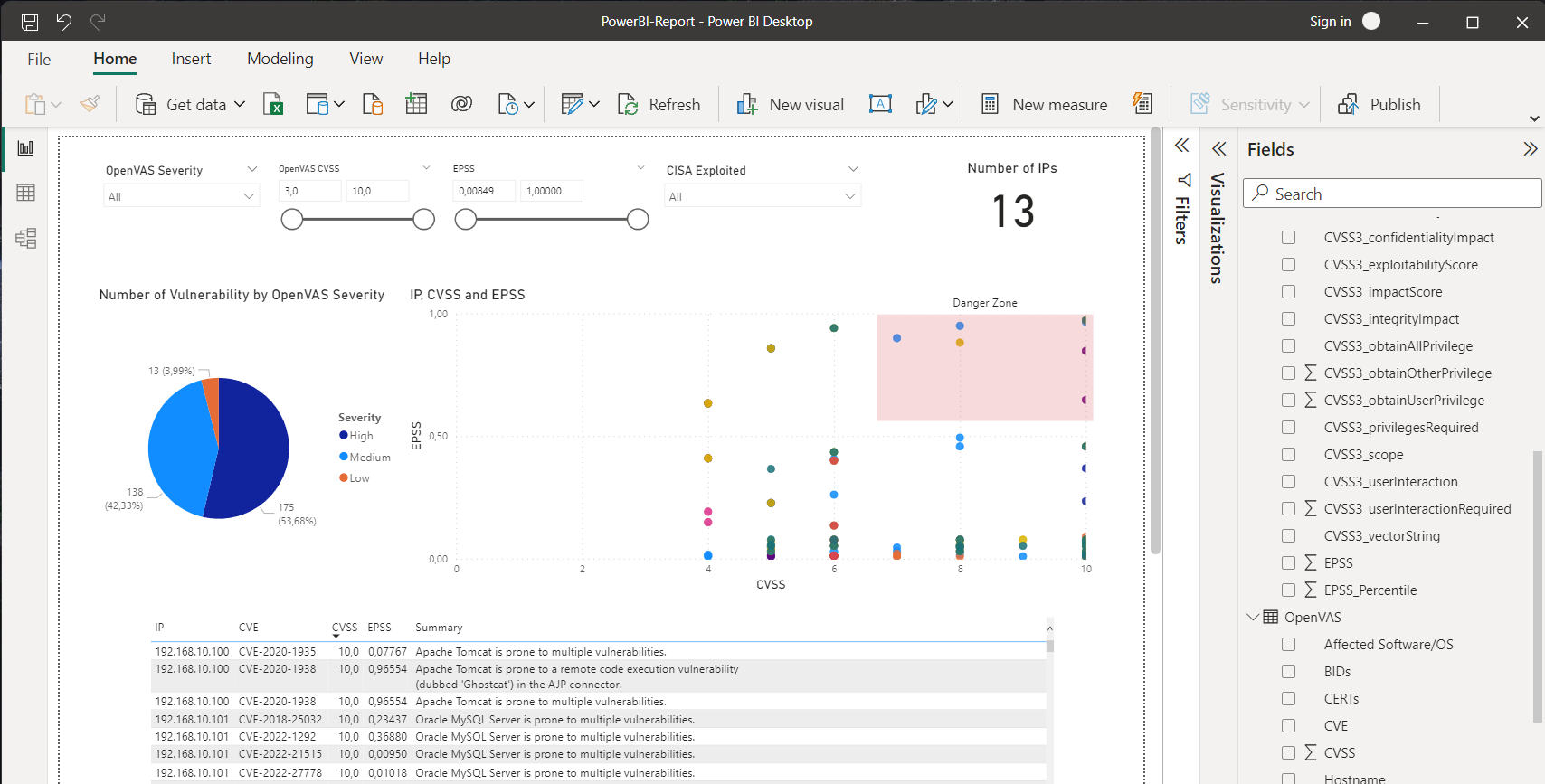
You can use tools like PowerBI to combine the results from the scanner with the information downloaded by the script in the repository.
After the download the required information will be extracted, formatted, and output files will be generated.
CVSS, EPSS and a combined file of all C will be a. Outputs are a in json and cs.
Additionally the information is imported into a sqlite database.
The goal was not performance or efficiency.
Instead the script is written in a simple way. Multiple steps are made to make easier to understand and traceable. Files from intermediate steps are written to disk to allow you make it easier for you to adjust the commands to your needs.
It is only using bash, jq, and sqlite3 to be very beginner friendly and demonstrate the usage of jq.
PowerBI Example Dashboard
This repository contains a demo folder with a PowerBI template file. It generate a dashboard which you can adjust to your needs.

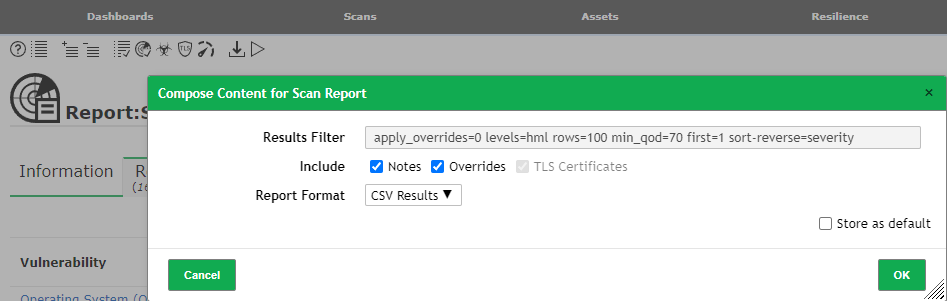
The Open must be in the cs for the import to work.

PowerBI will use the created CVE.json file and create a relationship:

You can download PowerBI for free from and you don't need an Microsoft account to use it.
Configuration
1. Get an NIST API key:
2. cp en .env
3. edit the .env file and add your API key
4. optional: edit docker-compose file and adjust the cron schedule
5. optional: edit data/stash/config/logstash.conf
6. docker-compose up -d
7. you will find the files in data/n/output/ after the script completed. It needs several minutes.
Run
You can either wait for cron to execute the download script on a schedule.
Alternatively you can execute the download script manually by running:
Container Description
There are three docker containers.
The cron container downloads the information once a week (Monday 06:00) and stores the files in the output directory.
It uses curl and wget to download files. jq is used work with json.
The filebeat container reads the json files and forwards it to the logstash container.
The logstash container can be used to send to a OpenSearch instance, upload it to Azure Log Analytics, or other supported outputs.
Filebeat and logstash are optional and are only included for continence.
Example output files
Several output files will be generated. Here is an estimate:
You can expect this information for every CVE:
Links
项目信息
开发语言:Shell
Star 数:143
技术要点
该项目属于安全软件方向的开源资源,代码结构清晰,适合安全研究人员学习参考。项目围绕Downloads Information from NIST (CVSS), first.org (EPSS), and CISA (Exploited Vulnerabilities) and combines them into one list. Reports from vulnerability scanners like OpenVAS can be enriched with this information to prioritize remediation. The repository also contains a PowerBI template to show how such a dashboard can be created. 展开,提供了可运行的实现,对理解相关安全机制、工具原理与攻防技术具有较高的研究价值。
从技术实现角度看,此类项目的核心在于对底层原理的深入理解与工程化落地。开发者在研究过程中可以结合官方文档与社区讨论,梳理项目的初始化流程、核心模块职责与数据流转,逐步掌握其中的技术细节与设计思路。
使用与学习建议
1. 下载源码压缩包,解压到本地环境。
2. 根据项目类型准备对应的运行环境与依赖。
3. 按照 README 中的步骤完成配置与部署。
4. 在隔离的测试环境中运行验证,避免影响生产系统。
免责声明
本资源来源于开源社区,仅供安全研究、技术学习与合法授权范围内的攻防演练使用,请勿用于任何非法或侵害他人权益的用途。使用本项目产生的一切后果由使用者自行承担。
| 资源标题 | CVE-Vulnerability-Information-Downloader - Downloads Information from NIST (CVSS), first.org |
| 所属分类 | 安全软件 |
| 发布作者 | admin |
| 发布时间 | 2026-10-05 22:41:22 |
| 下载权限 | 免费下载 |
| 附件数量 | 2 个下载链接 |
| 浏览次数 | 253 |
| 讨论数量 | 0 |
| 主题状态 | 正常讨论中 |