 病毒分析
点击放大
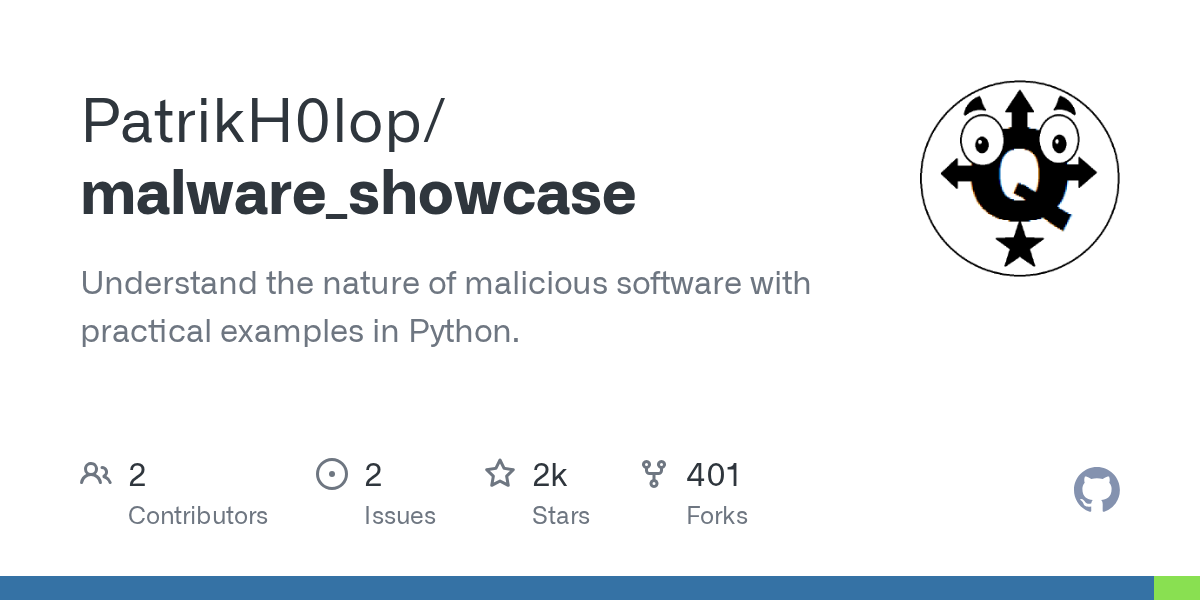
malware_showcase - Understand the nature of malicious software with p
项目说明
!license
!
!dev
!types
Malware Showcase
<img align="middle" src="
This repository contains explanatory examples of malicious behavior like _file infection_ or _remote code execution_. It's supposed to demonstrate and explain
the nature of malicious software with practical examples in Python.
Note: _This repository contains examples of malicious files. It should be used for educational purposes only. Usage of files in this repository for any other purpose might cause you legal issues, e the provided examples are very simple. It is advised to follow the instructions._
Showcase structure
- Simple file infector in Python (with explanation)
- Simple trojan in Python (with explanation)
- Simple worm in Python (with explanation)
- Simple keylogger in Python (with explanation)
- Simple ransomware in Python (with explanation)
- Simple adware in Python (with explanation)
- Simple dropper in Python (with explanation)
Installation
Make sure that you ha Python3, system package python3-dev and Python package wheel.
To setup a en, run the following command:
Or you can install required Python packages listed in requirements.txt on your own.
If something goes wrong during the installation, the script should provide you information
about possible failures. You can then focus on the problematic steps in setup_env.sh and
fix the problem.
项目信息
开发语言:Python
Star 数:2310
技术要点
该项目属于病毒分析方向的开源资源,代码结构清晰,适合安全研究人员学习参考。项目围绕Understand the nature of malicious software with practical examples in Python.展开,提供了可运行的实现,对理解相关安全机制、工具原理与攻防技术具有较高的研究价值。
从技术实现角度看,此类项目的核心在于对底层原理的深入理解与工程化落地。开发者在研究过程中可以结合官方文档与社区讨论,梳理项目的初始化流程、核心模块职责与数据流转,逐步掌握其中的技术细节与设计思路。
使用与学习建议
1. 下载源码压缩包,解压到本地环境。
2. 根据项目类型准备对应的运行环境与依赖。
3. 按照 README 中的步骤完成配置与部署。
4. 在隔离的测试环境中运行验证,避免影响生产系统。
免责声明
本资源来源于开源社区,仅供安全研究、技术学习与合法授权范围内的攻防演练使用,请勿用于任何非法或侵害他人权益的用途。使用本项目产生的一切后果由使用者自行承担。
| 资源标题 | malware_showcase - Understand the nature of malicious software with p |
| 所属分类 | 病毒分析 |
| 发布作者 | admin |
| 发布时间 | 2026-10-05 23:11:51 |
| 下载权限 | 免费下载 |
| 附件数量 | 2 个下载链接 |
| 浏览次数 | 184 |
| 讨论数量 | 0 |
| 主题状态 | 正常讨论中 |