 病毒分析
点击放大
malware-classification - Towards Building an Intelligent Anti-Malware Syste
项目说明
Towards Building an Intelligent Anti-Malware System: A Deep Learning Approach using Support Machine for Malware Classification
===
![]()
![DOI]()
![AUR]()
![PyPI]()
The full paper may be read at arXiv.org.
Abstract
Effective and efficient mitigation of malware is a long-time endeavor in the information security community.
The de of an anti-malware system that can counteract pre malware is a prolific activity that
may benefit several sectors. We en an intelligent anti-malware system that utilizes the power of deep learning
(DL) models. Using such models would enable the detection of newly-released malware through mathematical generalization.
That is, finding the relationship between a gi *x* and its corresponding malware family *y*, *f : x → y*.
To accomplish this feat, we used the Malimg dataset[12] which
consists of malware images that were processed from malware binaries, and then we trained the following DL models 1 to
classify each malware family: CNN-SVM[16],
GRU-SVM[3], and MLP-S e has shown that the GRU-S out
among the DL models with a predicti of ≈84.92%. This stands to reason for the mentioned model had the
relatively most sophisticated architecture design among the presented models. The exploration of an even more optimal
DL-S is the next stage towards the engineering of an intelligent anti-malware system.
Dataset
To use the dataset from this repository, you can intall pt-datasets,
Usage
First, clone the project.
Run the setup.sh to ensure that the pre-requisite libraries are installed in the en.
Run the main.py with the following parameters.
For instance, use the CNN-S.
To run a trained model, run the classifier.py with the following parameters.
For instance, use a trained CNN-S.
Results
The experiments were conducted on a laptop computer with Intel Core(TM) i5-6300HQ CPU @ 2.30GHz x 4, 16GB of DDR3 RAM, and NVIDIA GeForce GTX 960M 4GB DDR5 GPU. Table 1 shows the hyperparameters used in the study.
Table 1. Hyperparameters used in the DL-S.
|Hyperparameters|CNN-S|MLP-SVM|
|---------------|-------|-------|-------|
|Batch Size|256|256|256
|Cell Size|N/A|[256, 256, 256, 256, 256]|[512, 256, 128]|
|No. of Hidden Layers|2|5|3|
|Dropout Rate|0.85|0.85|None|
|Epochs|100|100|100|
|Learning Rate|1e-3|1e-3|1e-3|
|SVM C|10|10|0.5|
<br>

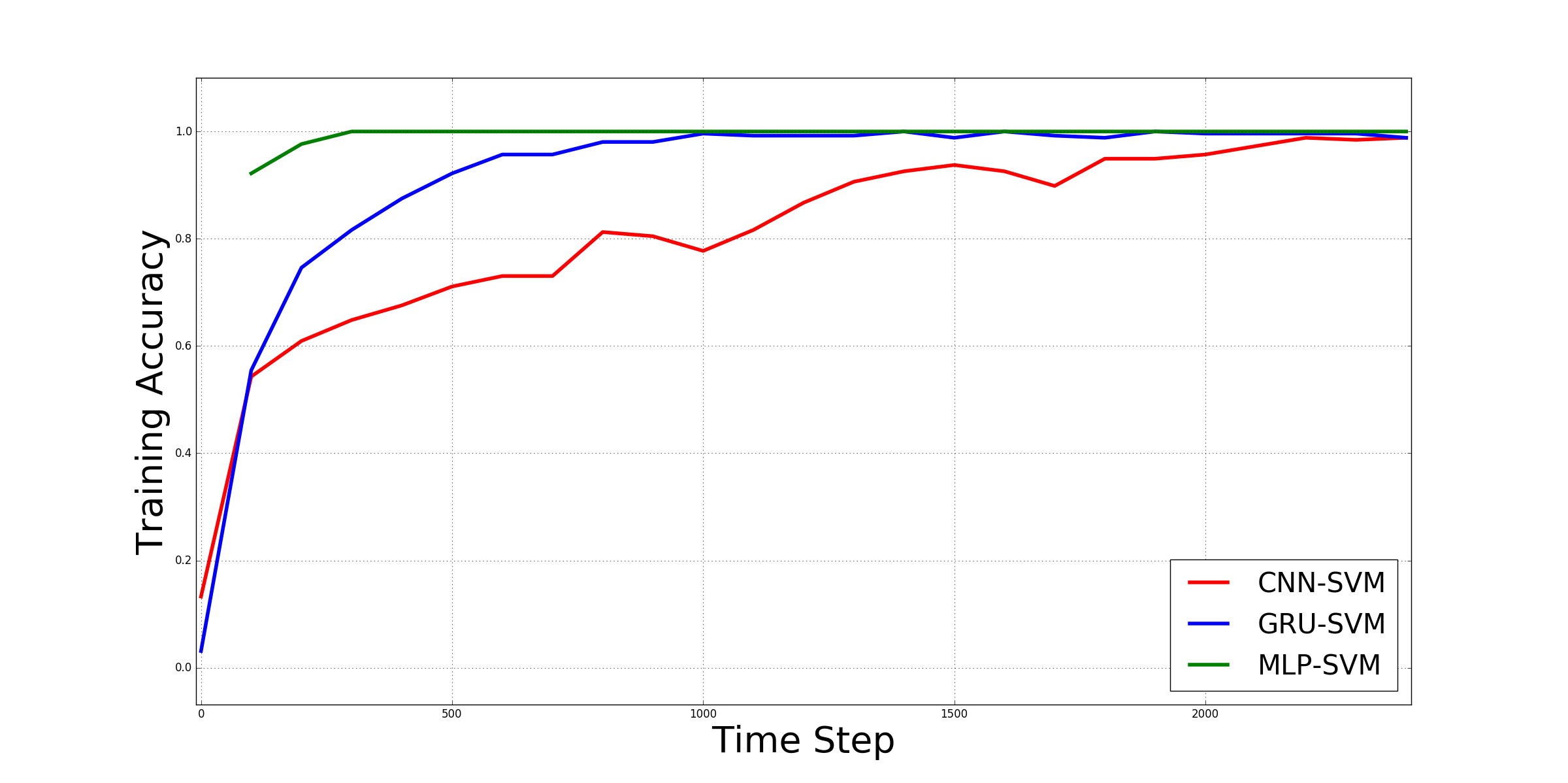
Figure 1. Plotted using matplotlib. Training accuracy of the DL-S on malware classification using the Malimg dataset.
Figure 1 summarizes the training accuracy of the DL-S for 100 epochs (equi to 2500 steps, since 6400 ×
100 ÷ 256 = 2500). First, the CNN-S accomplished its training in 3 minutes and 41 seconds with an a
training accuracy of 80.96875%. Meanwhile, the GRU-S accomplished its training in 11 minutes and 32 seconds
with an a training accuracy of 90.9375%. Lastly, the MLP-S accomplished its training in 12 seconds with
an a training accuracy of 99.5768229%.
Table 2. Summary of experiment results on the DL-S.
||CNN-S|MLP-SVM|
|---------|-------|-------|-------|
|Accuracy|77.2265625%|84.921875%|80.46875%|
|Data points|256000|256000|256000|
|Epochs|100|100|100|
|F1|0.79|0.85|0.81|
|Precision|0.84|0.85|0.83|
|Recall|0.77|0.85|0.80|
Table 2 summarizes the experiment results on the DL-S on malware classification using the
Malimg dataset.
Citation
To cite the paper, kindly use the following BibTex entry:
To cite the repository/software, kindly use the following BibTex entry:
License
项目信息
开发语言:Python
Star 数:172
技术要点
该项目属于病毒分析方向的开源资源,代码结构清晰,适合安全研究人员学习参考。项目围绕Towards Building an Intelligent Anti-Malware System: A Deep Learning Approach using Support Vector Machine for Malware Classification展开,提供了可运行的实现,对理解相关安全机制、工具原理与攻防技术具有较高的研究价值。
从技术实现角度看,此类项目的核心在于对底层原理的深入理解与工程化落地。开发者在研究过程中可以结合官方文档与社区讨论,梳理项目的初始化流程、核心模块职责与数据流转,逐步掌握其中的技术细节与设计思路。
使用与学习建议
1. 下载源码压缩包,解压到本地环境。
2. 根据项目类型准备对应的运行环境与依赖。
3. 按照 README 中的步骤完成配置与部署。
4. 在隔离的测试环境中运行验证,避免影响生产系统。
免责声明
本资源来源于开源社区,仅供安全研究、技术学习与合法授权范围内的攻防演练使用,请勿用于任何非法或侵害他人权益的用途。使用本项目产生的一切后果由使用者自行承担。
| 资源标题 | malware-classification - Towards Building an Intelligent Anti-Malware Syste |
| 所属分类 | 病毒分析 |
| 发布作者 | admin |
| 发布时间 | 2026-10-05 23:30:23 |
| 下载权限 | 免费下载 |
| 附件数量 | 2 个下载链接 |
| 浏览次数 | 507 |
| 讨论数量 | 0 |
| 主题状态 | 正常讨论中 |