项目说明
O
MazeWalker’s goal is to reduce malware analysis time by automating runtime data collection and better e helping a researcher to concentrate on static analysis and less on its dynamic part.
<p align="center"><img src="./images/title.png"/></p>
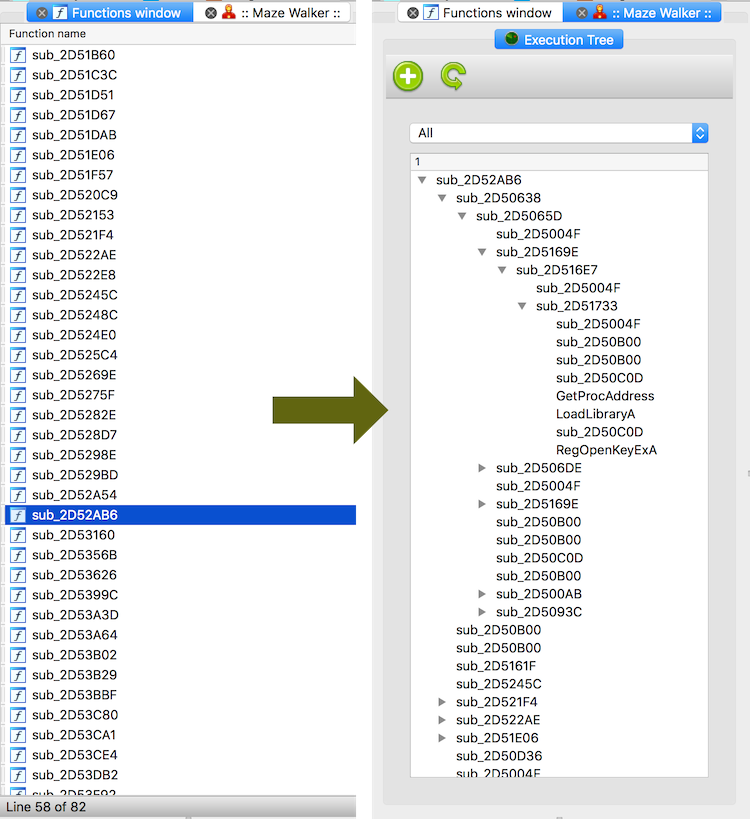
Packed code - MazeWalker monitors all memory areas where code execution took place, to be able to reconstruct the whole execution later. If there was a code change in the already monitored area (runtime code decryption), then the new will be saved too, for later analysis. This approach appears to be useful for general code unpacking.Position independent code - to sol control flow change issues (jmp eat, call [eax], etc.), the instruction reference address and the control flow change target address are collected for later usage during static phase.System APIs - it's no secret, that knowing system API parameters that were used during execution could be helpful in understanding malware internals and o purpose. So, MazeWalker has a Python-based API call site analysis to save or alter API's params that were used. More could be read on the dedicated wiki page.Code co - MazeWalker collects the list of all basic blocks that were executed, in all monitored processes. This information is used to assist code na latter by marking control flow graph in IDA database.Code dispersion - most malware today will use code injection and distribute itself into different process on the system. MazeWalker is able to follow those injection paths and collect data in all processes, to show a more clear picture of sample behaviour.En Detection - a lot of anti-research techniques are based on the gathered information by system APIs. As MazeWalker's API interception abilities are script-based, it is very easy to add new anti-anti-research countermeasures (wiki). - all collected runtime information is processed by a IDAPython plugin and presented in more (hopefully) meaningful way. The new way of , takes into account the runtime information and shows how the code was executing per-thread view. This way helps more logically understand the design of the program and further focus on a particular task. <p align="center"><img src="./images/.png"/></p>
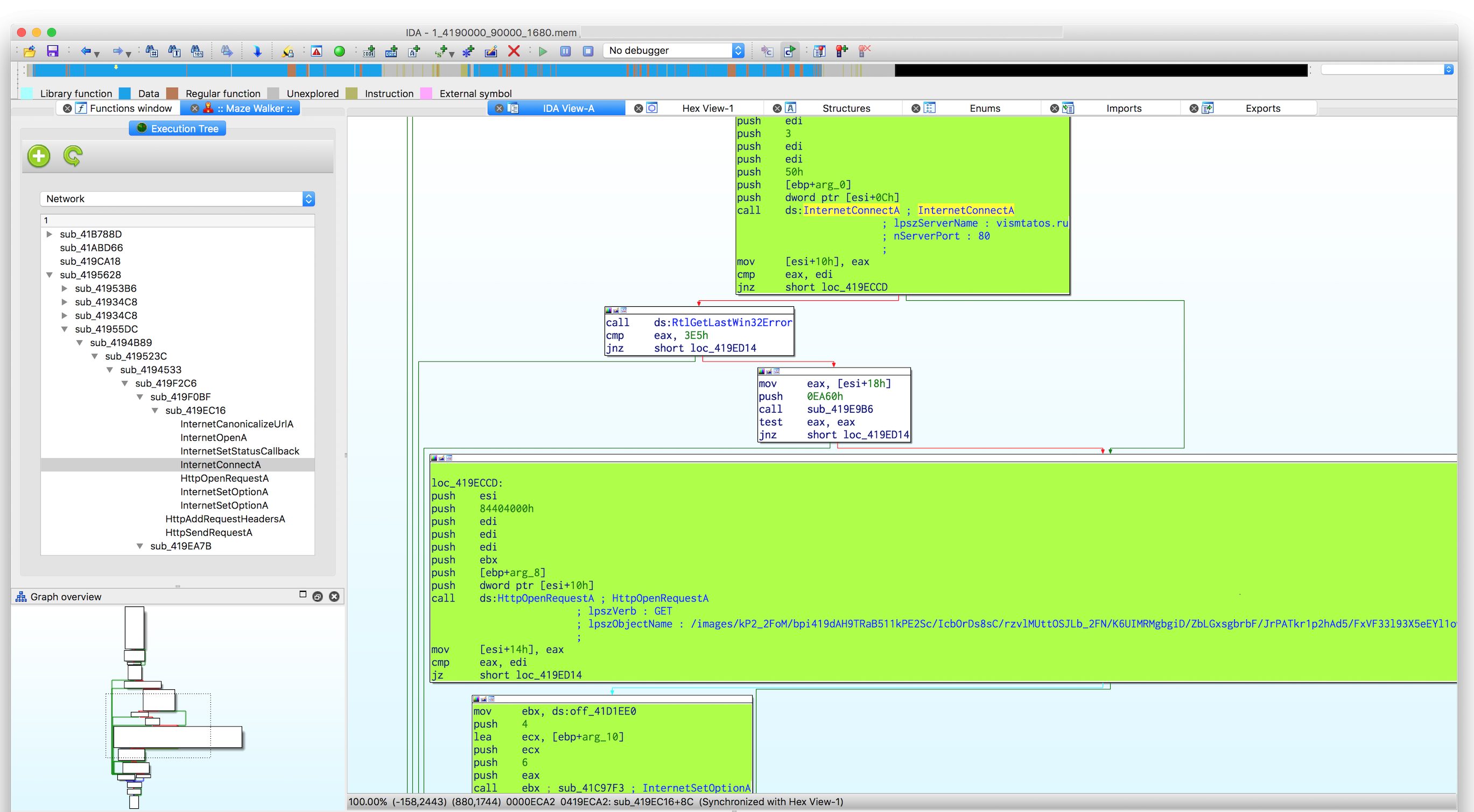
Focus - in case there is some particular topic of interest for the analyzed sample (Network interaction), there is a way to filter out the execution data and focus only on the specifics of the research.<p align="center"><img src="./images/filter.png"/></p>
Design
MazeWalker is based on Intel's Pin framework for runtime data collection and IDAPython for in-IDA .
<p align="center"><img src="./images/design.png"/></p>
Usage
Please refer to wiki for detailed explanation.
项目信息
开发语言:C++
Star 数:170
技术要点
该项目属于病毒分析方向的开源资源,代码结构清晰,适合安全研究人员学习参考。项目围绕Toolkit for enriching and speeding up static malware analysis展开,提供了可运行的实现,对理解相关安全机制、工具原理与攻防技术具有较高的研究价值。
从技术实现角度看,此类项目的核心在于对底层原理的深入理解与工程化落地。开发者在研究过程中可以结合官方文档与社区讨论,梳理项目的初始化流程、核心模块职责与数据流转,逐步掌握其中的技术细节与设计思路。
使用与学习建议
1. 下载源码压缩包,解压到本地环境。
2. 根据项目类型准备对应的运行环境与依赖。
3. 按照 README 中的步骤完成配置与部署。
4. 在隔离的测试环境中运行验证,避免影响生产系统。
免责声明
本资源来源于开源社区,仅供安全研究、技术学习与合法授权范围内的攻防演练使用,请勿用于任何非法或侵害他人权益的用途。使用本项目产生的一切后果由使用者自行承担。