 防护思路
点击放大
Systems-as-Attack-Vectors-SOC-Level-Defensive-Understanding - Systems Security, Vulnerability Management & Misco
项目说明
Systems as Attack — SOC Le Understanding
Systems Security, Management & Misconfiguration Analysis focused SOC walkthrough co real-world attack , patching strategies, defensi, and enterprise system hardening.
---
Introduction
Modern cyber attacks are no longer limited to phishing emails or tricking users into clicking malicious links. Threat actors increasingly target the systems themselves — servers, cloud platforms, databases, machines, and enterprise infrastructure.
Even if employees are security aware, a poorly secured or system can still become the weakest link.
In this room, I explored how attackers abuse systems, common attack paths, misconfigurations, supply chain compromises, and how SOC analysts help defend enterprise en. 🛡️
---
Task 1 — Introduction
This room focused on understanding how systems themsel attack and how defenders can identify and mitigate these risks.
Key Learning Objectives
* Understanding systems in modern infrastructure
* Exploring real-world attacks against systems
* Learning remediation and mitigation techniques
* Practicing SOC-style defensi
---
Task 2 — Definition of System
A system can refer to:
* Physical servers
* machines
* Databases
* Cloud services like Microsoft 365
* Enterprise infrastructure devices
Attackers target systems because compromising a single high-value asset can lead to massi impact.
Examples of High-Impact System Breaches
| Target System | Potential Impact |
| ------------------------- | ------------------------------------ |
| Student Laptop | Botnet infection or credential theft |
| Bank Administrator Laptop | Access to banking infrastructure |
| Law Firm Mail Server | Mailbox theft and extortion |
| Industrial Control Server | Full ransomware deployment |
| Go Web Panel | Website defacement |
The room highlighted an important concept:
> Security awareness alone is not enough if the underlying systems remain .
---
Task 3 — Attacks on Systems
Threat actors commonly target systems through:
* Weak or reused passwords
* Malware-infected pirated software
* services
* Misconfigurations
* Supply chain compromises
Human-Led Attacks
Attackers frequently abuse poor security practices such as:
* Credential reuse
* Weak passwords
* Unauthorized software installation
* Malicious USB devices
These attacks often serve as the initial access into enterprise en.
---
Understanding
A is a flaw in software or infrastructure that attackers can exploit to gain unauthorized access or execute malicious actions.
Thousands of are published every year, and many become actively exploited shortly after disclosure.
Some major examples include:
* Shellshock
* EternalBlue
* Follina
* PrintNightmare
Once publicly disclosed, receive a C for tracking and remediation purposes.
---
Task 4 —
The room emphasized the importance of rapid patch management.
Common Defensi
| Defense | Purpose |
| ------------------- | ------------------------------------ |
| Patch Management | Fixes software |
| IPS/WAF Rules | Blocks exploit attempts |
| Access Restrictions | Limits exposure |
| Mitigations | Temporary protection before patching |
One highlighted example was:
This was referenced as the critical SharePoint known as “ToolShell”.
Why Patching Matters
Unpatched systems remain one of the biggest attack surfaces in enterprise en. Attackers often scan the internet for known services and exploit them within hours or days of disclosure.
---
Task 5 — Misconfigurations
Not every compromise happens because of a software bug.
Sometimes, the system itself is configured insecurely.
Common Misconfigurations
* Weak passwords
* Open databases
* Disabled firewalls
* Publicly exposed cloud storage
* Excessi
A secure product deployed insecurely is still .
Example Attack Flow
1. Deploy a secure database
2. Store sensitive data
3. Use weak credentials
4. Disable firewall protections
5. Attacker gains access and steals data
This demonstrates how operational mistakes can become major security incidents.
---
Detecting Misconfigurations
SOC teams and security engineers commonly identify weaknesses through:
* Penetration Testing
* Scanning
* Configuration Audits
* CIS Benchmark Reviews
Unlike software , misconfigurations usually require administrati rather than software patches.
---
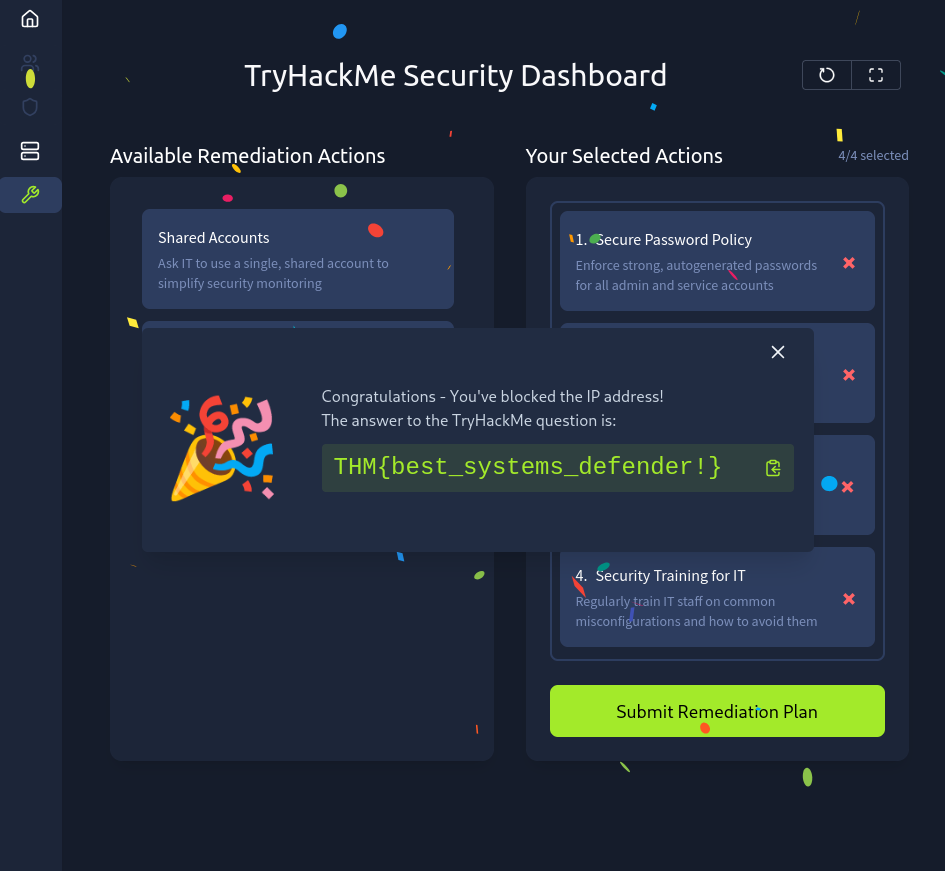
Task 6 — Practice Lab
The practical section in analyzing systems and preparing remediation actions.
---
Flag 1 — Systems at Risk
The first objecti on identifying insecure systems requiring remediation.
The exercise reinforced the importance of distinguishing between:
* requiring patches
* Misconfigurations requiring secure reconfiguration

---
Flag 2 — Remediation Plan
The second task in de an effecti strategy for protecting enterprise systems.
The remediation planning process included:
* Applying patches
* Restricting unnecessary exposure
* Improving configurations
* Reducing attack surface
* Enhancing monitoring capabilities

---
Defensi
This room reinforced several important SOC concepts:
1. Patch Management: Keeping systems updated significantly reduces exposure to known exploits.
2. Configuration Hardening: E patched systems can become compromised if deployed insecurely.
3. Network Restrictions: Restricting access to trusted IP ranges reduces external attack surface.
4. Defense in Depth: No single security control is enough. Effecti requires multiple o protections.
---
Real-World Relevance
Modern ransomware groups and ad threat actors heavily rely on internet-facing systems for initial access.
Common targets include:
*
* Mail servers
* Remote desktop services
* Cloud dashboards
* Database servers
A single exposed or system can lead to:
* Domain compromise
* Data theft
* Ransomware deployment
* Full enterprise outages
This is why SOC analysts must understand both human-based and system-based attack .
---
Conclusion
This room provided a strong introduction to system-focused attack surfaces and defensi from a SOC perspective. <br/>
Understanding , misconfigurations, patch management, and attack paths is essential for modern defenders. <br/>
As a SOC analyst, identifying insecure systems early can prevent large-scale compromises before attackers gain a foothold. 🔍🛡️ <br/>
---
Resources
* DFIR Report — Real Intrusion Case Studies
* CISA Known Exploited Catalog
* BleepingComputer Supply Chain News
* Check Point Li Map
---
项目信息
开发语言:未知
Star 数:1
技术要点
该项目属于防护思路方向的开源资源,代码结构清晰,适合安全研究人员学习参考。项目围绕Systems Security, Vulnerability Management & Misconfiguration Analysis focused SOC walkthrough covering real-world attack vectors, patching strategies, defensive remediation, and enterprise system hardening.展开,提供了可运行的实现,对理解相关安全机制、工具原理与攻防技术具有较高的研究价值。
从技术实现角度看,此类项目的核心在于对底层原理的深入理解与工程化落地。开发者在研究过程中可以结合官方文档与社区讨论,梳理项目的初始化流程、核心模块职责与数据流转,逐步掌握其中的技术细节与设计思路。
使用与学习建议
1. 下载源码压缩包,解压到本地环境。
2. 根据项目类型准备对应的运行环境与依赖。
3. 按照 README 中的步骤完成配置与部署。
4. 在隔离的测试环境中运行验证,避免影响生产系统。
免责声明
本资源来源于开源社区,仅供安全研究、技术学习与合法授权范围内的攻防演练使用,请勿用于任何非法或侵害他人权益的用途。使用本项目产生的一切后果由使用者自行承担。
| 资源标题 | Systems-as-Attack-Vectors-SOC-Level-Defensive-Understanding - Systems Security, Vulnerability Management & Misco |
| 所属分类 | 防护思路 |
| 发布作者 | admin |
| 发布时间 | 2026-10-06 00:31:00 |
| 下载权限 | 免费下载 |
| 附件数量 | 2 个下载链接 |
| 浏览次数 | 366 |
| 讨论数量 | 0 |
| 主题状态 | 正常讨论中 |