 漏洞知识库
点击放大
guac - GUAC aggregates software security metadata into a
项目说明
GUAC: Graph for Understanding Artifact Composition
<p align="center">
<img src="
</p>
![build]() ![PkgGoDev]() ![Go Report Card]()
![OpenSSF Scorecard]()
Note: GUAC is under acti - if you are interested in
contributing, please look at contributor guide. GUAC is an
OpenSSF incubating project under the
Supply Chain Integrity WG.
Graph for Understanding Artifact Composition (GUAC)
aggregates software security metadata into a high fidelity graph
database—normalizing entity identities and mapping standard relationships
between them. Querying this graph can dri organizational outcomes
such as audit, policy, risk management, and e assistance.
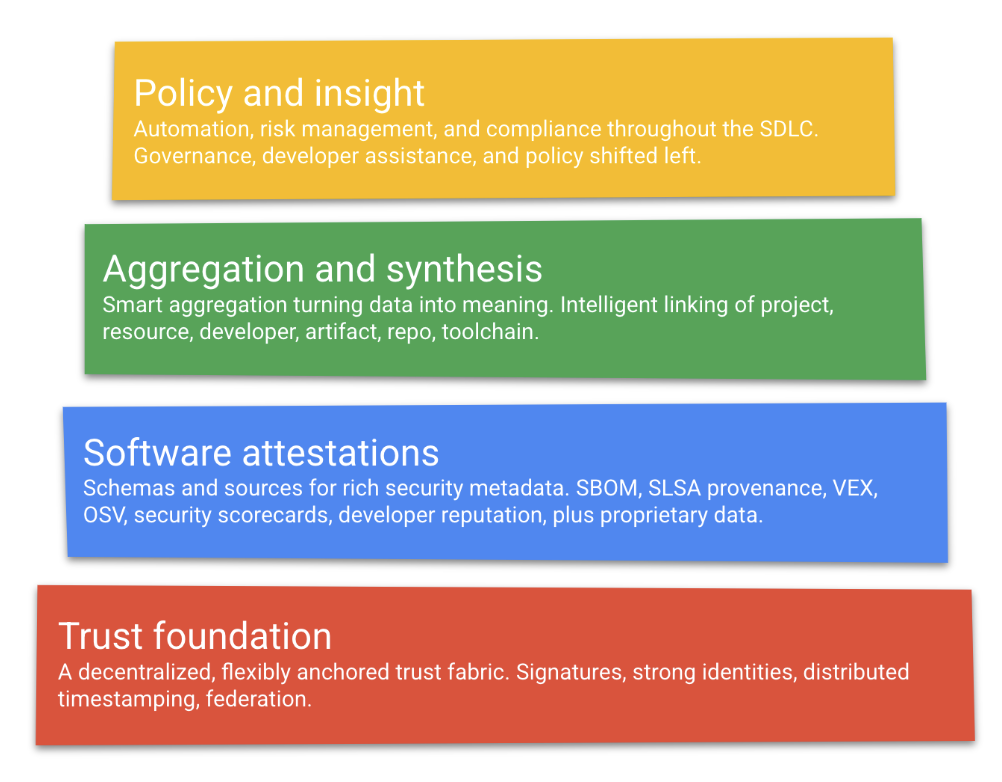
Conceptually, GUAC occupies the “aggregation and synthesis” layer of the
software supply chain transparency logical model:
!image
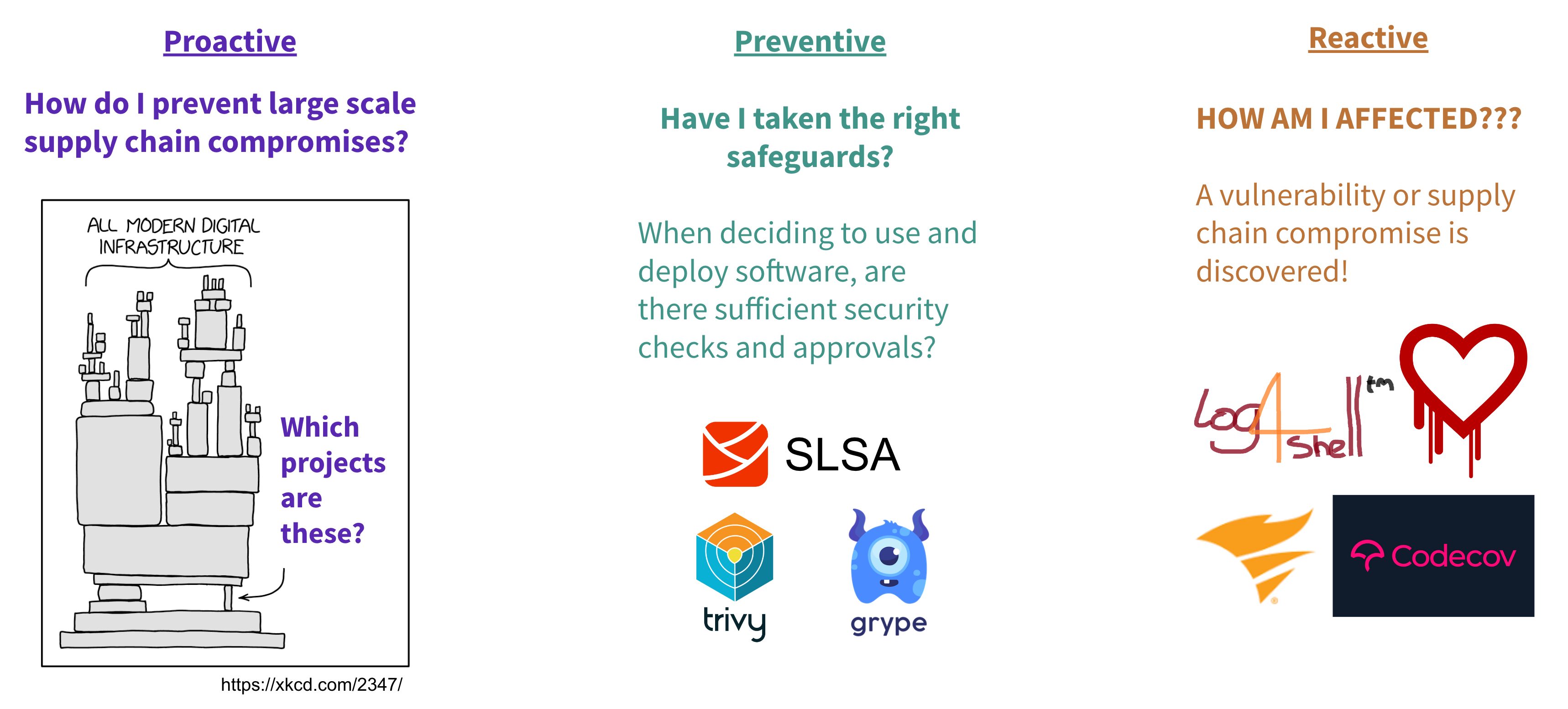
A few examples of questions answered by GUAC include:
!image
Quickstart
Our documentation is a good place to get started.
We ha demos use cases that you
can take a look.
Starting the GUAC services with our
docker compose quickstart.
Try in a De
The repo ships a .de
config that brings up the full GUAC stack (GraphQL, REST, collectsub,
ingestor, NATS, and the deps_dev / os collectors)
locally on Docker, backed by the published GUAC release image. Open
the repo in VS Code with the De extension
and select "Reopen in Container" -- the GraphQL playground forwards
to port 8080 and the REST API to 8081. Also works with JetBrains
Gateway and DevPod.
Docs
All documentation for GUAC lives on docs.guac.sh, backed
by the following docs github repository.
Architecture
Here is an o of the architecture of GUAC:
!guac_api
For an in-depth view and explanation of components of the GUAC Beta, please
refer to how GUAC works.
Supported input documents
Note that GUAC uses software identifiers standards to help link metadata
together. However, these identifiers are not always a and heuristics
need to be used to link them. Therefore, there may be unhandled edge cases and
errors occurring when ingesting data. We appreciate it if you could create a
data quality issue
if you encounter any errors or bugs with ingestion.
GraphQL backends
GUAC supports multiple backends behind a software
abstraction layer. The GraphQL API is always the same and clients should be
unaffected by which backend is in use. The backends are categorized into:
1. Supported/Unsupported: Supported backends are those which the GUAC project
is committed to actively maintain. Unsupported backends are not actively
maintained but will accept community contributions.
2. Complete/Incomplete: Complete backends support all mandatory GraphQL
APIs. Incomplete backends support a subset of those APIs and may not be
feature complete.
3. Optimized: The backend has gone through a level of optimization to help
impro.
The two backend that are Supported, Complete, and Optimized are:
optimized):
a non-persistent in-memory backend that doesn't require any additional
infrastructure. Also acts as a conformance backend for API
implementations. We recommend starting with this if you're just starting with
GUAC!
optimized)
with PostgreSQL: a persistent backend based on
Entity Framework for Go that can run on SQL
backends. GUAC only supports ent with PostgreSQL. Other ent backends such as
MySQL and
SQLite are unsupported.
The other backends are:
optimized):
a persistent backend based on ArangoDB
incomplete):
a persistent backend based on neo4j and
openCypher. This backend should work with any
database that supported openCypher queries.
default keyvalue backend, but using Redis as storage.
default keyvalue backend, but using TiKV as storage.
Additional References
Communication
For more information on how to get in in the community, mailing lists and
meetings, please refer to our community page
For security issues or code of conduct concerns, an e-mail should be sent to
.
Go
Information about go, including the project charter, can be found in the
guacsec/go repo.
项目信息
开发语言:Go
Star 数:1550
技术要点
该项目属于漏洞知识库方向的开源资源,代码结构清晰,适合安全研究人员学习参考。项目围绕GUAC aggregates software security metadata into a high fidelity graph database.展开,提供了可运行的实现,对理解相关安全机制、工具原理与攻防技术具有较高的研究价值。
从技术实现角度看,此类项目的核心在于对底层原理的深入理解与工程化落地。开发者在研究过程中可以结合官方文档与社区讨论,梳理项目的初始化流程、核心模块职责与数据流转,逐步掌握其中的技术细节与设计思路。
使用与学习建议
1. 下载源码压缩包,解压到本地环境。
2. 根据项目类型准备对应的运行环境与依赖。
3. 按照 README 中的步骤完成配置与部署。
4. 在隔离的测试环境中运行验证,避免影响生产系统。
免责声明
本资源来源于开源社区,仅供安全研究、技术学习与合法授权范围内的攻防演练使用,请勿用于任何非法或侵害他人权益的用途。使用本项目产生的一切后果由使用者自行承担。
| 资源标题 | guac - GUAC aggregates software security metadata into a |
| 所属分类 | 漏洞知识库 |
| 发布作者 | admin |
| 发布时间 | 2026-10-06 00:59:52 |
| 下载权限 | 免费下载 |
| 附件数量 | 2 个下载链接 |
| 浏览次数 | 115 |
| 讨论数量 | 0 |
| 主题状态 | 正常讨论中 |